Table Of Content
The average starting salary of students completing their game design studies with a bachelor's degree from the schools was $64,065 and master's degree $73,947. One of the nation’s premier college ranking organizations has given high marks to UW-Stout’s academic programs in game design. There are several types of technical documentation, and in this article, we’ll look at such things as HLD, LLD, and DLD. Outlines the deviations from the target Enterprise Architecture roadmap and best practice. Discusses the longer term plan to move toward the more desirable approach. In particular, outlines the steps to be taken within the project, or separately to “make good” any undesirable aspect of the proposed approach.
How to Choose the Right Cloud Platform for Your Software Development Needs?
HLD documentation should cover the planned implementation of both software and hardware. High-Level design can provide a framework or guidance for across the team the get a better understanding of the feature. This documentation can drive the detailed design to follow the overall solution. To create a High-Level Design there are many approaches to start with.
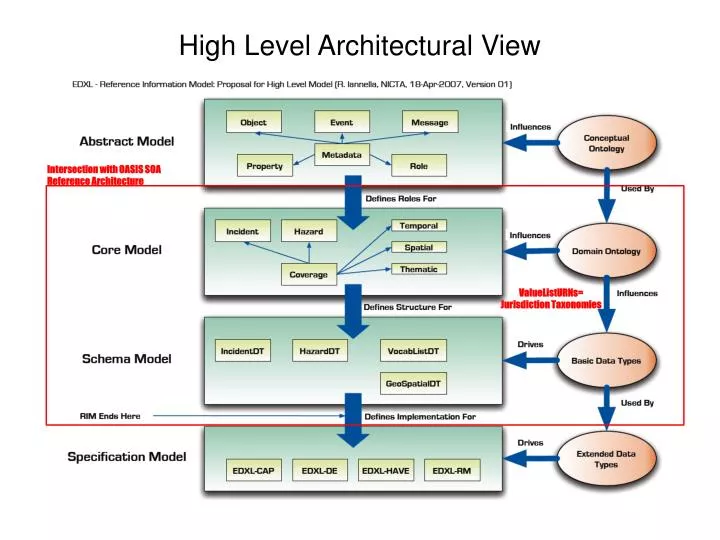
Technical Documentation: What is the difference between HLD, LLD, DLD?
"Game design is like architecture" - video game jobs described by those who do them - VG247
"Game design is like architecture" - video game jobs described by those who do them.
Posted: Mon, 23 Jul 2018 07:00:00 GMT [source]
It helps in identifying potential risks and challenges early in the development process, allowing for timely mitigation strategies. Additionally, it serves as a communication tool, helping to convey the system’s design and functionality to stakeholders, including developers, testers, and project managers. High-level design (HLD) is a crucial phase in the software development life cycle (SDLC) where the architecture of a software system is conceptualized and defined. It focuses on defining the overall structure of the system, including its components, modules, interfaces, and data for meeting functional and non-functional requirements. This article explores the concept of high-level design, its importance, key components, and best practices.
During which phase of project is HLD created?
This establishes the foundation for the rest of the design, and it establishes the foundation for clear and accurate communication with the product owner and everyone else who will be using the system. The two goals here are to get aligned with the domain experts on how they speak of things and how these things interact with each other. Preliminary design—In the preliminary stages, the need is to size the project and to identify those parts of the project that might be risky or time consuming. Incomplete migrations hurt a system in the long run; they addenormous complexity, hurt reliability, and make programming unpleasant. If existing systems must be turned down to achieve the proposed design, describe how that transition will happen.
It is crucial to consider potential challenges and risks during the high-level design phase. Identify any technical, resource-related, or time constraints that may impact the design. This allows for proactive planning and mitigation of potential issues before they arise.
Detailed Design (DD) is a phase in the software development process where the software design is transformed into a detailed design that can be used to guide the implementation of the system. DD is the next step after HLD and LLD, it could include all the elements of LLD, but with more depth and detail. It includes specific, detailed descriptions of the data structures, algorithms, interfaces, and other elements of the system, as well as pseudocode or other representations of the code that will be written. DD may also specify any specific design patterns that will be used in the implementation of the system. High-level design phase, developers focus on defining the system’s architecture, including its components, modules, interfaces, and data. They also consider the system’s functional and non-functional requirements, such as performance, scalability, and security, to ensure that the design meets the needs of the stakeholders.

The simple way to do it is to create a diagram to represent the solution. The document will not contain a full explanation, like what framework to be used. But more like a general flow on how the process would be and what technical solution that we needed to complete the requirement. In software development, high-level design (HLD) is the process of creating an abstract representation of a software system before detailing the lower-level design. The high-level design provides a broad overview of the software architecture, including the overall structure and organization of the system, the main components and their interactions, and the main algorithms and data structures that will be used. Finally, document the high-level design and keep it up-to-date throughout the software development process.
This section establishes the approach to reducing Technical Debt, cost of the Technical Debt and the approach to bring the alignment to Enterprise Architecture Strategy. In this article we outline best practice on what constitutes a high quality E2E solution design. A simple trick for managing documentation activities is maintaining templates that vary with project size; small projects use small templates, and large projects use large templates.
Who is responsible for making HLD?
Let’s briefly examine architecture and how its documents are relevant to High-Level Design. This investment cannot be justified at the early stages of a project as the stakeholders have yet to sign off on the requirements, Statement of Work, and scope. Preparing a Low-Level Design is a multi-iteration, customized, bespoke, and expensive process involving a broad audience of technical staff (business analysts, developers, testers, and DevOps engineers).
The Architecture Design Blueprint or Technical Options Assessment is an effective way to produce a lean and just-in-time architecture that is aligned with the shorter sprint cycles of incremental product delivery. End-to-End HLDs are needed for undertaking complex transformation projects such as introduction of new IT stack, the introduction of a new product line, or a new business. The data flow and use cases section documents all necessary interactions between the user and the system. The Solution Architect usually owns the high-level design (HLD) document. They imagine someone somehow detached from real-world implementation realities, but that does not have to be the case. A document highlighting the fundamental concepts of a proposed solution, allowing them to make an informed decision on the budget, schedule, and project risk, is required during this stage.
How to Design a Kanban Board - hackernoon.com
How to Design a Kanban Board.
Posted: Fri, 17 Feb 2023 08:00:00 GMT [source]
Criteria considered included academics, faculty, technology and career prospects. Community support is provided during standard business hours (Monday to Friday 7AM - 5PM PST). “There used to be a line about Los Angeles that everyone was either a screenwriter or an actor,” says Scotti Sitz, owner of L.A.
It’s not unusual for you to create a new service that represents the new domain. How big to make a service is a topic for another day, but in general you want to follow the guideline of having a new service for a given aggregate. In the example above it’s pretty clear the aggregate root is a Survey, and pretty much everything else falls under that. I bring up a drawing tool like LucidChart and build the diagram on the fly.
Data flows, flowcharts, data structures are included in HLD documents so that developers/implementers can understand how the system is expected to work with regards to the features and the design. It describes the relation between various components and functions of the system. It defines the actual logic for each and every module of the system, design Architecture to understand the flow of the system with function and database design. LLD is the process of taking the high-level design (HLD) and creating a more detailed, technical representation of the system.
For program quality, it’s No. 2 in the Midwest and No. 5 in the U.S., along with high marks for other UW-Stout programs. The university also offers a Bachelor of Science degree in computer science with a concentration in game design and development. System design involves creating both a High-Level Design (HLD), which is like a roadmap showing the overall plan, and a Low-Level Design (LLD), which is a detailed guide for programmers on how to build each part. High-Level Design and Low-Level Design are the two main aspects of System Design.
After identifying the modules and components, the relationships and interfaces between them must be defined. Determine how the modules will communicate with each other and exchange data. This can be done using APIs, message passing, or shared databases, depending on the system’s requirements. All the data flows, flowcharts, data structures, etc. are in these docs so that developers can understand how the system is expected to work with regard to the features and the database design.
The idea is to keep the keep the design simple to understand, easy to follow and clear about assumptions and tradeoffs. A good HLD should be able to communicate your thoughts to your expected audience. Now before proceeding further think of what will happen to the server if there is no request thrown by clients. Here Web Sockets play a crucial role that solving problems and enabling us to have real-time communication. They are more or less used in every system to be designed because we can not let our system wait for a response. They are very useful in Real-time web applications, gaming applications, chat applications.




No comments:
Post a Comment